Toronto’s efforts to combat chronic traffic congestion have taken a significant setback, as the city has quietly cancelled a planned automated traffic enforcement pilot following the Ontario government’s decision to ban speed cameras. The move has sparked frustration among transportation experts, business leaders, and urban planners who say the decision removes a proven tool at a time when gridlock continues to cost the region billions each year.
A Key Anti-Gridlock Measure Shelved
Pilot Project Never Reached Installation Stage
The automated traffic enforcement pilot was intended to target some of Toronto’s most common and disruptive driving behaviours, including vehicles blocking intersections — often referred to as “blocking the box” — and driving in dedicated bus lanes. Cameras were scheduled to be installed during the summer to collect data, with ticketing not expected until at least next year due to the need for provincial approval.
However, the cameras were never deployed. CBC Toronto has learned that the pilot has now been formally abandoned, effectively ending what city officials once described as a key element of Toronto’s congestion management strategy.
In a statement, city spokesperson Kate Lear confirmed that recent provincial legislation played a decisive role in the cancellation.
“Recent provincial legislation prohibiting the use of Automated Speed Enforcement cameras indicated that other enforcement tactics would be favoured over automated enforcement tactics,” Lear said.
Provincial Speed Camera Ban Changes the Landscape
Legislation Passed Under Ford Government
The cancellation follows legislation passed by Premier Doug Ford’s Progressive Conservative government in late October, which banned the use of speed cameras across Ontario. While the legislation specifically targets automated speed enforcement, it has had broader implications for other forms of automated traffic enforcement not explicitly outlined in the Highway Traffic Act.
The timing of the provincial ban proved critical. Toronto had approved a comprehensive congestion management plan just one year earlier — a plan that included automated enforcement as a cornerstone. With the province signalling a shift away from camera-based enforcement, city officials appear to have determined that proceeding with the pilot was no longer viable.
When asked whether Ontario would consider allowing automated enforcement for violations such as blocking intersections or driving in bus lanes, the Ministry of Transportation said it had not received a proposal from Toronto and is not exploring any expansion of automated enforcement beyond what is currently permitted under provincial law.
Experts Warn of Missed Opportunity
“A Tool That Works,” Says Urban Planning Expert
Transportation experts argue that abandoning the pilot eliminates a proven method for changing driver behaviour. Matti Siemiatycki, director of the Infrastructure Institute at the University of Toronto, said automated enforcement has shown measurable success in other jurisdictions.
“This is taking out of the toolbox a tool that works,” Siemiatycki said. “So people will continue to experience all the same congestion that they have, all the same traffic and all the same frustration.”
Siemiatycki was among several experts featured in CBC Toronto’s three-part investigative series Gridlocked: The Way Out, which examined how other cities are tackling traffic congestion. At the time, Seattle stood out as the only North American city using automated enforcement to issue tickets for blocking intersections and driving in bus lanes.
Seattle’s Results Highlight Potential Benefits
Low Repeat Offence Rates
Data from Seattle suggests that automated enforcement can significantly reduce repeat offences. Between the launch of Seattle’s program in 2022 and the end of 2024, only about nine per cent of drivers who received a warning for blocking the box later committed the same offence again.
“The automated enforcement is working,” Siemiatycki said. “People get an initial ticket and then they learn, and they don’t do it again.”
Repeat violations were higher for drivers caught using bus lanes improperly, with a recidivism rate of about 45 per cent, but experts still point to overall improvements in compliance and traffic flow.
“To not use one of the tools that’s worked in other regions really puts us behind in an area that we need to be leading,” Siemiatycki added.
Business Leaders Express Disappointment
Board of Trade Had Backed Automated Enforcement
Toronto’s business community has also voiced concern over the pilot’s cancellation. The Toronto Region Board of Trade released a congestion action plan earlier this year that explicitly recommended automated enforcement to address traffic violations contributing to gridlock.
The plan called for legislative amendments to the Highway Traffic Act that would allow cameras to capture drivers blocking intersections, double-parking, stopping in bike lanes, and obstructing bus stops.
Board president Giles Gherson said the news was deeply disappointing.
“This was a fundamental part of our action plan,” Gherson said. “It’s clear that automated enforcement of traffic infractions would be a significant contributor to reducing congestion.”
Gridlock in the Greater Toronto and Hamilton Area is estimated to cost more than $40 billion annually in lost economic and social productivity, according to various studies cited by the city and business groups.
City Says Pilot Still Provided Value
Learning From the First Phase
Despite cancelling the pilot, the City of Toronto says the initial phase was not wasted. In a statement, the city said it gathered valuable information from applicant companies that had responded to the request for proposals.
Officials added that Toronto remains committed to exploring how emerging technologies could support congestion management in the future, even if automated enforcement is currently off the table.
However, critics argue that without provincial cooperation, the city’s options remain limited.
Returning to Traditional Enforcement Methods
Boots on the Ground Replace Cameras
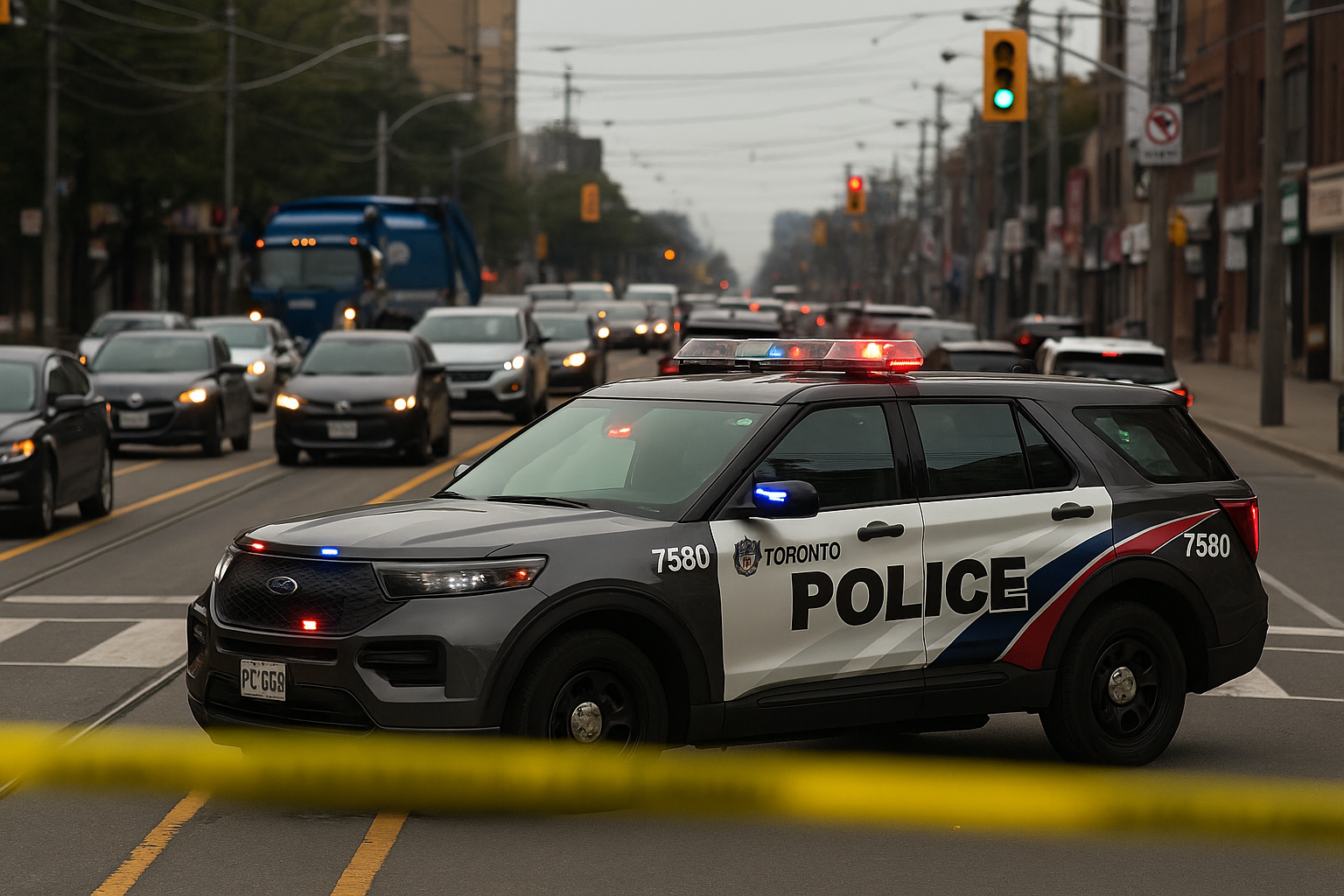
With automated enforcement no longer an option, Toronto is relying on more traditional methods to deter traffic violations. Traffic agents are deployed at busy intersections to prevent vehicles from blocking the box, while police officers issue warnings and fines during targeted enforcement blitzes.
The city has already taken steps to strengthen these efforts. Last fall, fines for blocking the box increased dramatically — from $90 to as much as $450 at most intersections.
Additionally, Toronto’s 2025 budget included $3 million to quadruple the number of traffic agents from 25 to 100, expanding their presence across the city’s busiest corridors.
Ticketing Data Shows Increased Enforcement
More Tickets Issued, But Questions Remain
According to data obtained through a freedom of information request, Toronto police issued 1,352 tickets for blocking intersections in 2024, resulting in more than $40,000 in fines. That figure represents more tickets than were issued for the same offence in the previous five years combined.
While enforcement has clearly intensified, experts question whether manual enforcement alone can deliver meaningful, long-term improvements to traffic flow in a city as large and complex as Toronto.
Calls for New, Evidence-Based Solutions
“How Are We Actually Going to Solve These Problems?”
With automated enforcement no longer part of the strategy, urban planners say the city must quickly identify alternative tools.
“If automated enforcement is off the table, then new tools are needed,” Siemiatycki said. “How are we actually going to solve these problems? We need another set of solutions, and those need to be clear and they should be evidence-based.”
Potential alternatives discussed by experts include congestion pricing, expanded transit priority measures, improved intersection design, and stronger coordination between municipal and provincial governments.
Conclusion: Gridlock Fight Faces New Challenges
The cancellation of Toronto’s automated traffic enforcement pilot underscores the growing tension between municipal congestion-fighting efforts and provincial policy decisions. While city officials continue to expand traditional enforcement and explore other technologies, many experts warn that the loss of automated tools will make it harder to meaningfully reduce gridlock.