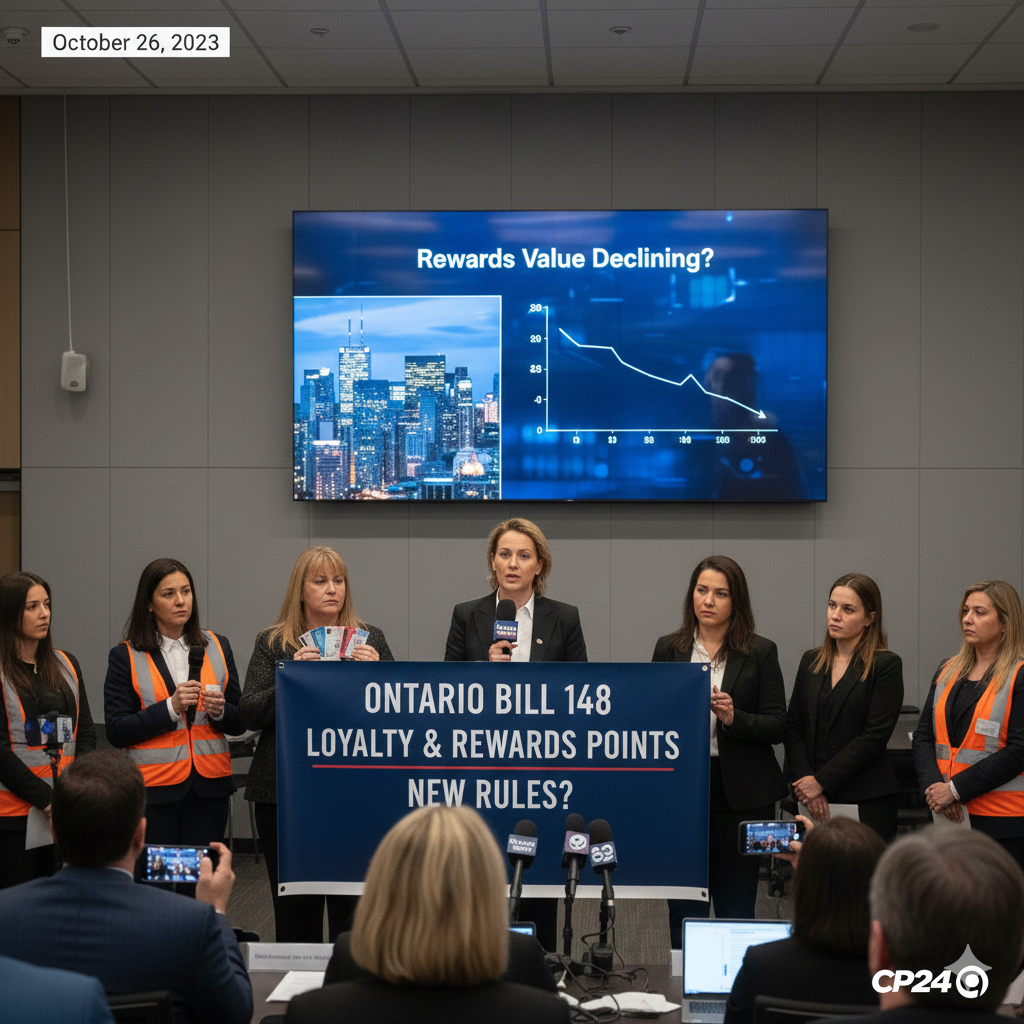
A proposed bill in Ontario has sparked growing concern from shopper and consumer-rights groups, who warn it may dramatically amend longstanding protections for loyalty and rewards points. While the government maintains the legislation is meant to modernize and clarify consumer-protection rules, critics argue it could quietly pave the way for retailers and businesses to impose expiry dates on points — undermining a benefit that many Ontarians rely on for discounts, groceries, travel, and more.
As Ottawa-area consumers weigh the potential impact, the debate raises broader questions about fairness, transparency, and the value of “earned rewards” in a time of rising living costs.
What the Current Law Says — and What’s Changing
History of Rewards-Point Protections
Under current legislative rules in Ontario, reward points earned through loyalty programs typically cannot expire simply because time has passed — a protection designed to safeguard consumers who accumulate points over long periods.
The core of these protections stems from the Protecting Rewards Points Act (enacted via an amendment to the Consumer Protection Act, 2002). That law explicitly prohibits suppliers from writing into consumer agreements any clause that causes rewards points to expire merely due to the passage of time.
Exceptions to the no-expiry rule are limited, including cases of account inactivity (if a program’s terms allow it), or where points are only redeemable for very low-value items (under a threshold such as $50).
Thus, for many Ontarians, the points they earn through grocery purchases, retail shopping, or travel benefits carry a lasting value — often treated like a form of savings or credit.
The New Legislation Under Debate
That legal framework is now under pressure. The government has recently proposed substantial amendments as part of a broader legislative package, Bill 46 (the “Protect Ontario by Cutting Red Tape Act, 2025”). Schedule 5 of this bill would rewrite how rewards-points agreements are regulated under the Consumer Protection Act.
Under the proposed changes:
-
All agreements offering rewards points — new or existing — would need to comply with new regulatory standards, possibly including clearer disclosure and revised terms.
-
The bill would permit the government to define, through future regulations, the conditions under which points could expire, be cancelled, or suspended.
-
Consumers could request reinstatement of points that they believe were wrongly expired, cancelled, or suspended. If a dispute arises, they would have a private right of action to recover lost points.
-
The government may even apply new rules retroactively, meaning rewards programs signed prior to the bill’s passage could be affected.
In effect, while the earlier law banned expiry “based only on the passage of time,” Bill 46 would shift the legal basis: expiry might become possible if regulations allow it. This has triggered alarm among consumer-rights advocates and everyday shoppers alike.
Why the Proposed Changes Are Triggering Alarm
Risk to Consumers’ Hard-Earned Value
For many Ontarians, loyalty points represent more than marketing perks: they are a form of earned value. In tough economic times — when groceries, rent, and other essential expenses stretch household budgets — loyalty points often help families offset costs or make occasional splurges more affordable.
Critics argue that by allowing retailers or programs to set expiry rules, the bill could strip away that value overnight. This is especially worrisome for people who accumulate points slowly over years — for example, through grocery shopping, credit-card rewards, or gas-station loyalty programs.
“As it is written, this bill would give corporations the power to wipe out the value you earned,” one opposition legislator warned recently during debates at the provincial legislature.
Lack of Consumer Clarity and Potential Unfairness
Another concern centers on transparency. Unless strict regulations mandate clear disclosure of new expiry or suspension rules, companies may include complex or obscure terms in fine print — potentially leaving consumers unaware until their points vanish.
Moreover, because the proposed law would allow future regulatory changes and possibly retroactive effects, consumers may find themselves subject to a shifting landscape of rights and obligations — undermining the stability of loyalty programs many expected to remain dependable.
Legal and Contractual Uncertainty
Legal experts also signal alarm. According to the Ontario Bar Association (OBA), retroactively changing the rights embedded in existing consumer agreements undermines fundamental legal principles.
In practice, this could mean that someone with points earned under a program in 2022, expecting them to persist indefinitely, might find those points wiped out in 2026 because of new regulations — a scenario that many consider unfair and misleading.
Government’s Defence: Modernization, Not Erosion
The provincial government, however, maintains that this legislation is not intended to erode consumer protections — but to modernize them.
According to official statements, Bill 46 is designed to simplify the existing framework, improve regulatory clarity for businesses, and ensure that loyalty-point agreements are up to date with modern retail practices.
The government also emphasizes that the bill does not necessarily mean that point expiry will be reintroduced across the board — rather, it enables the possibility of more regulated and transparent terms for loyalty programs going forward, while still preserving certain protections.
Moreover, businesses that offer loyalty points will be required to meet disclosure requirements under the new law, which supporters argue could lead to clearer communication about how and when points may expire or be cancelled.
Government officials point out that in the current framework, while time-based expiry is forbidden, points can already be lost under certain conditions — for example if an account becomes inactive or if the program closes. The proposed amendments would instead allow a standardized set of regulated conditions for expiry or suspension, which they argue could, in the long run, benefit both consumers and businesses.
What Could Change — And What Consumers Should Watch
Possibility of Expiry, Suspension or Cancellation
If Bill 46 passes and the government enacts regulations, loyalty programs may begin to impose expiry dates or inactivity-based point cancellations. This could affect many types of points: grocery loyalty rewards, credit-card miles, retail-store points, or travel-related programs — effectively transforming them from long-term savings to short-term perks.
Need for Clear Disclosure
Under the new regime, businesses will likely be required to disclose key information about their loyalty programs: how points are earned, when they may expire or be suspended, and any conditions tied to account activity or redemption thresholds. Consumers should demand clear, simple language in membership agreements going forward.
Right to Reinstatement and Legal Recourse
One of the more consumer-friendly aspects of the proposed law is that it allows consumers to request reinstatement of points lost improperly, and gives them a private right of action if a business fails to comply. This could pressure companies to be more transparent and fair in their policies.
Potential Retroactive Impact
Perhaps most controversially, the legislation may allow changes to apply retroactively — changing the rules for people who signed up years ago under a different expectation. Why this matters: someone who believed their points wouldn’t expire may suddenly find them at risk. This prospect has drawn sharp criticism from legal experts and consumer advocates alike.
Voices of Concern: Who Is Speaking Out
Opposition parties in the provincial legislature have been vocal. During recent debates, one member described the proposal as “a quiet rollback on consumer protections,” especially concerning for families using points for essentials like groceries and holiday gifts.
Meanwhile, several consumer-rights and advocacy groups are urging Ontarians to pay attention — and to speak out before the bill becomes law. They argue that even quietly allowing expiry could disproportionately harm lower- and middle-income families who depend on accumulating rewards over time.
Legal experts from the Ontario Bar Association caution that retroactive changes to contract rights undermine trust in the legal system and risk destabilizing relationships between businesses and consumers.
On the business side, many retailers and loyalty-program operators are watching closely. Because loyalty points are often built into long-term customer relationships, any changes could force companies to rethink how they structure programs, communicate with members, and manage their liabilities. The lack of clarity over prospective regulations — and how sweeping any new policy might be — adds to the uncertainty.
What Ontarian Consumers Should Do Now
Given the uncertainty, experts recommend that residents of Ontario take several precautionary steps:
-
Check your loyalty accounts: Review your current loyalty programs (grocery stores, credit cards, travel points, retail clubs) and note down your point balances.
-
Read terms and conditions carefully: As many businesses may update their loyalty-program rules soon, pay attention to changes in terms — especially any clauses about expiration, inactivity, or account suspension.
-
Redeem what you value sooner rather than later: If possible, consider using points before new laws or regulations change the rules.
-
Stay alert for updates: Keep an eye on news related to Bill 46 and any regulations issued under it. Changes could come quickly — and some may apply retroactively.
-
Advocate for clear consumer protections: Support calls for regulations that preserve point value, guarantee disclosures, and prevent unfair expiry or cancellation.
Conclusion: A Moment of Reckoning for Loyalty Programs
The proposed amendments to Ontario’s consumer-protection rules mark a significant turning point in how loyalty programs might operate in the province. What was once a stable protection — the guarantee that earned reward points wouldn’t fade simply because time passed — may soon become subject to new, potentially complex regulatory conditions.
For consumers who have long relied on loyalty points as a form of value — whether for groceries, essentials, travel, or occasional luxuries — the stakes are high. The uncertainty, the risk of retroactive application, and the potential for points to be cancelled or expire could undermine thousands of dollars worth of perceived savings.
Supporters of the changes argue the new rules will modernize the system, provide clearer regulation for businesses and consumers alike, and permit flexibility as retail habits evolve. But many are not convinced that this will lead to stronger protections — or fair outcomes — for everyday Ontarians.
At a time when families are feeling squeezed by inflation, housing costs, and rising expenses, the potential loss of loyalty-point value represents more than a policy technicality — it could make a real difference in someone’s ability to stretch a budget, put food on the table, or hold onto small savings.
Whether Bill 46 becomes law as currently drafted — or whether consumer pushback leads to amendments preserving point protections — remains to be seen. What is clear already, however, is that this debate has put the future of loyalty programs in Ontario squarely into the spotlight.